Agile Roadmap: The Complete Guide for 2026
Key takeaway: An agile roadmap is a living strategic document that shows where your product is headed without locking teams into fixed dates or rigid scope. It replaces the traditional feature-date contract with outcome-focused themes that adapt as you learn.
An agile roadmap communicates product direction while preserving flexibility. Traditional roadmaps promise specific features by specific dates. Agile roadmaps commit to problems worth solving. The difference matters because software teams rarely know in January what they should ship in September. Markets shift. Customer needs evolve. An agile roadmap builds adaptation into the planning process itself.
| Aspect | Traditional Roadmap | Agile Roadmap |
|---|---|---|
| Time horizon | 12-18 months fixed | Rolling 3-6 month view |
| Commitment level | Feature + date promises | Outcome-focused themes |
| Update frequency | Quarterly or annual | Continuous as learning happens |
| Stakeholder expectation | Delivery guarantee | Direction indicator |
| Flexibility | Low (scope creep = failure) | High (pivots = learning) |
| Best for | Regulated industries, hardware | SaaS, product-led teams |
Evidence block: According to the 2024 State of Agile Report from Digital.ai, 71% of organizations using agile methods report improved ability to manage changing priorities. Teams with flexible roadmaps shipped 34% more customer-requested features than teams with fixed annual plans.
What Is Agile Roadmap?
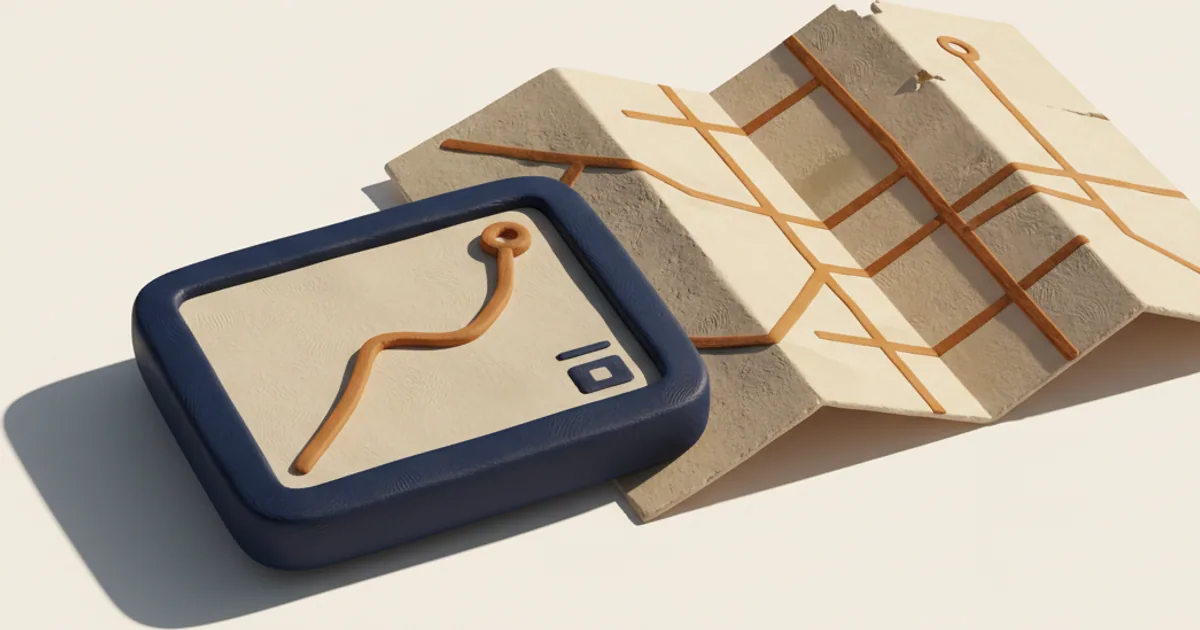
An agile roadmap is a strategic communication tool that shows product direction without over-committing to specifics. Think of it as a GPS that recalculates when conditions change rather than a printed MapQuest printout from 2004.
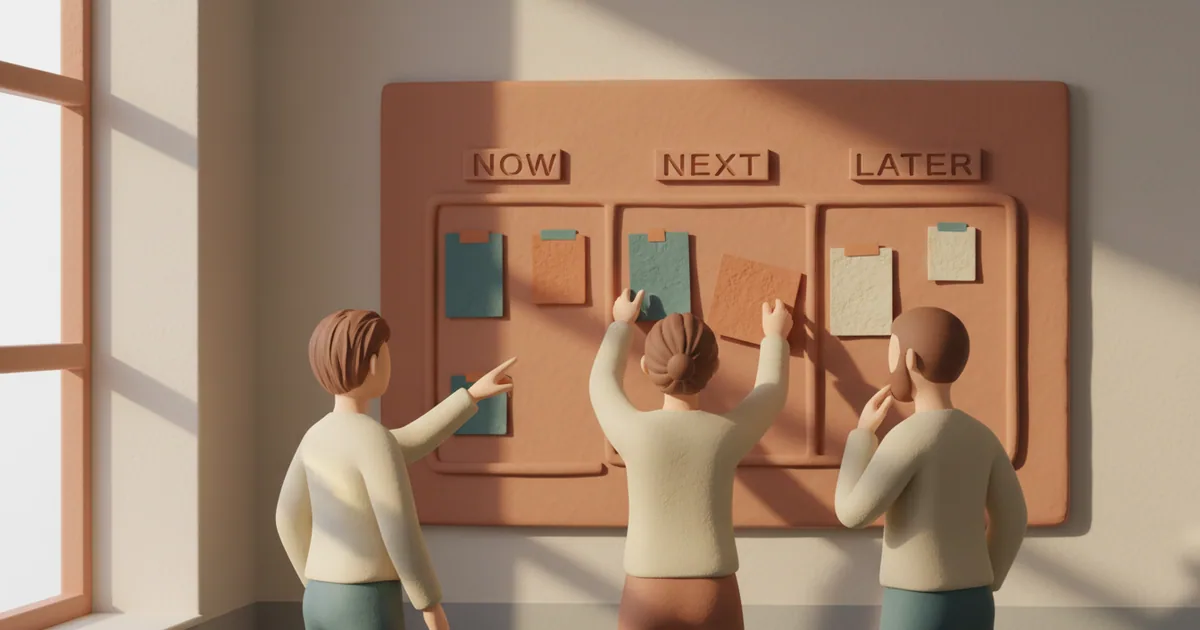
The core structure involves time horizons rather than calendar dates. "Now" contains work actively in progress. "Next" holds items the team has committed to tackle soon. "Later" captures validated opportunities needing more discovery. Some teams add a "Future" column for ideas worth tracking but not yet prioritized.
Each item typically represents a theme or outcome rather than a feature. "Reduce onboarding friction for enterprise users" beats "Build SSO integration" because the first version leaves room for discovery. Maybe SSO is the answer. Maybe it is better documentation. The roadmap captures the problem. The team discovers the solution.
This approach changes stakeholder conversations. Instead of "When will feature X ship?" you discuss "How are we progressing on reducing enterprise onboarding friction?" The second question opens space for trade-off discussions. The first backs teams into defensive positions.
Agile roadmaps handle uncertainty explicitly. Items in "Now" have high confidence. Items in "Later" carry low confidence. They might move up, get cut entirely. or morph into something different as customer research reveals new information.
Public-facing agile roadmaps add another layer. Customers want visibility into product direction. A public agile roadmap lets you share direction without making promises you cannot keep. You show themes and progress without committing to dates that will haunt you in support tickets six months later.
Agile Roadmap: Best Practices

Start with outcomes instead of outputs. Every roadmap item should answer "what customer or business problem does this solve?" If you cannot articulate the problem, the item does not belong on a strategic document.
Keep time horizons honest. If you cannot reliably predict work more than six weeks out, do not pretend otherwise. A roadmap showing detailed Q4 plans in Q1 is fiction. Fiction erodes trust.
Update frequently and visibly. An agile roadmap that only changes during quarterly planning is not agile. Good teams update whenever significant learning happens. A major customer interview. A competitor move. A technical spike proving an approach unworkable.
Evidence block: Research from Pendo's 2023 Product Benchmarks found that teams updating roadmaps weekly had 28% higher feature adoption rates than teams updating monthly. The correlation suggests frequent revision reflects deeper customer connection, not just process discipline.
Involve engineering early. Roadmap items need technical feasibility checks before they become commitments. A theme that sounds simple might hide massive technical debt. Engineers bring context that shapes prioritization.
Make trade-offs explicit. Every item on the roadmap means something else is not. "If we add this theme, what are we removing?" creates clarity that vague promises never achieve.
Use feedback to inform roadmap decisions. Customer votes on feature requests provide signal about demand. Support ticket patterns reveal pain points. Teams that collect feedback in scattered spreadsheets miss the patterns that should drive prioritization.
Tie roadmap progress to actual work. If your roadmap says "In Progress" but no related tasks exist in your issue tracker, something is broken. When a Linear project moves to "Done," the corresponding roadmap item should update. Manual status syncing creates drift.
Founder's Opinion
Rolling time horizons beat date-based roadmaps for most software teams.
The date-based approach creates perverse incentives. Teams pad estimates. Product managers defend timelines instead of discussing trade-offs. When something slips, the conversation becomes about blame rather than learning.
Rolling horizons flip the incentive structure. "Now / Next / Later" acknowledges that certainty decreases with distance. Teams can confidently commit to current work without pretending they know what August looks like.
The objection I hear most: "but our executives need dates for planning." Sometimes true. Sales needs to know when a feature ships to close deals. Finance needs forecasts tied to product capabilities.
The solution is not to fake certainty. Provide ranges and confidence levels. "We expect this theme to complete in Q2 with 70% confidence. If the technical approach proves harder, it could slip to Q3." More honest and more useful than a single date everyone knows is fiction.
For teams using Linear, the integration between roadmap visibility and actual engineering work matters enormously. A roadmap in a slide deck disconnected from issue tracking creates duplicate work and status drift. A roadmap that syncs with Linear projects shows real progress based on real work.
I would choose a simple "Now / Next / Later" board with automatic Linear sync over a sophisticated timeline tool with manual updates every time.
Frequently Asked Questions
How often should an agile roadmap be updated?
Update whenever significant learning happens. For most teams this means weekly reviews with occasional changes and monthly deep dives with more substantial shifts. The trigger should be new information rather than calendar cadence. A major customer conversation or competitive move might warrant immediate adjustment.
What is the difference between an agile roadmap and a product backlog?
The roadmap shows strategic direction and answers "what problems are we solving?" The backlog contains tactical work items and answers "what specific tasks will the team complete?" Roadmap themes break down into backlog items. When backlog work completes, roadmap themes show progress. The roadmap is for stakeholder communication. The backlog is for team execution.
How do you handle stakeholder requests that do not fit the current roadmap?
Capture them, evaluate them. communicate honestly. Every request deserves acknowledgment. Not every request deserves a roadmap spot. Build a system for collecting feedback so requests do not get lost. When the answer is no, explain why. "This is a great idea but it conflicts with our current focus on X" is more respectful than silence.
Can you have an agile roadmap with fixed deadlines?
Yes, but handle fixed deadlines as constraints rather than commitments. Some dates are genuinely immovable. A regulatory compliance deadline. A trade show launch. These belong on the roadmap as boundary conditions. The agile part is everything else. Scope can flex. Other items can deprioritize to protect the fixed deadline. Reserve fixed-date treatment for genuinely immovable external constraints.
How do you show an agile roadmap to customers without over-promising?
Use themes instead of features. Show progress status instead of dates. A public roadmap item like "Improving team collaboration (In Progress)" communicates direction without committing to specific functionality or timing. Some teams add voting mechanisms so customers can signal which themes matter most. Your roadmap shows direction and priorities. It is not a delivery guarantee.