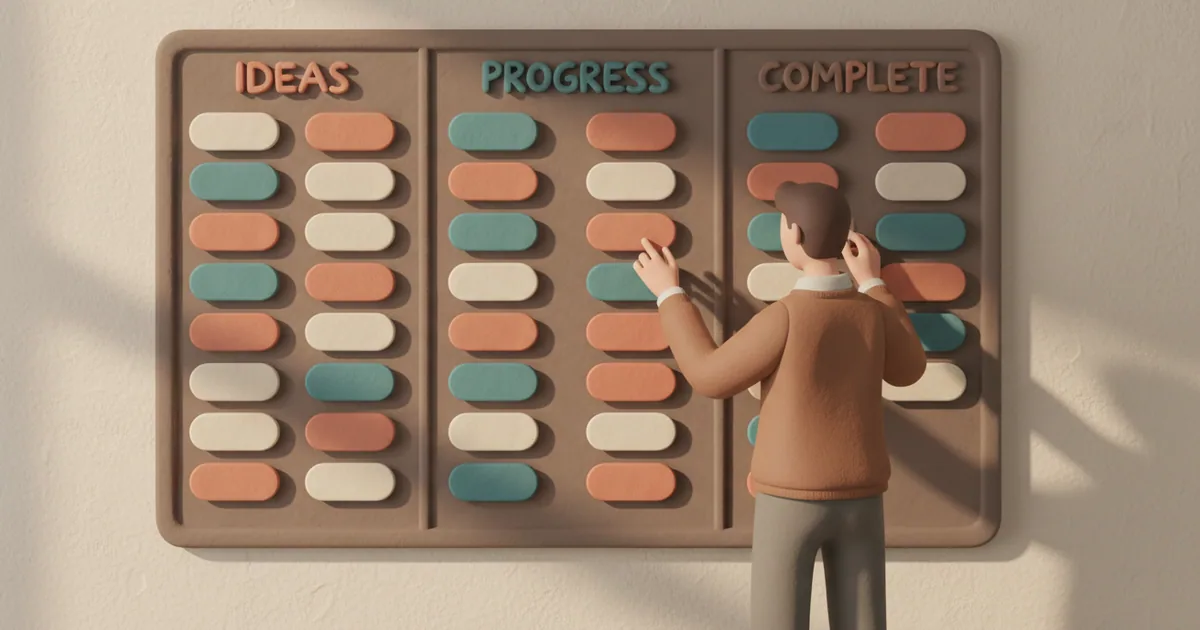

Startup Roadmap: The Complete Guide for 2026
A startup roadmap is a living document that shows what your team plans to build, when you expect to ship it. and why those bets matter more than the hundred other ideas you rejected. The best startup roadmaps communicate direction without becoming a contract. They align investors, team members. and early customers around a shared vision while leaving room to pivot when reality disagrees with your plan.
Most founders treat roadmaps as a fundraising deliverable or a list of features with dates attached. That approach fails within weeks. A useful roadmap captures strategic outcomes, not just tasks. It answers "what problem are we solving next quarter" rather than "what features will engineering build."
Why a startup roadmap determines your trajectory

Early-stage companies operate under extreme uncertainty. You have limited capital, a small team. and incomplete information about what customers actually want. A roadmap forces you to make explicit bets about where to focus.
The alternative is reactive chaos. Without a roadmap, your team responds to the loudest voice in the room. That might be a churning customer, an excited investor. or an engineer who wants to rebuild the authentication system. You end up with a product shaped by whoever yelled last.
Roadmaps create accountability. When you commit to a direction publicly, you can measure whether you followed through. Teams that operate without roadmaps often ship a lot of features but struggle to articulate what they accomplished in the last quarter. The work happened. Progress did not.
For fundraising, a roadmap demonstrates strategic thinking. Investors want to see that you understand your market, have a theory about what will drive growth. and can sequence work intelligently. A feature list does not show this. An outcome-based roadmap shows you understand the difference between output and impact.
Customer trust builds when you share your direction. Early adopters want to know if the product will grow with their needs. A public roadmap lets them see what is coming and influence what you build next. Teams using feature request software can connect customer votes directly to roadmap priorities.
How startup roadmaps work in practice
The mechanics vary by stage and team size. A pre-seed company with three people might keep the roadmap in a shared doc. A Series B company with forty engineers needs more structure.
Start with time horizons. Most startups benefit from three buckets: now, next. and later. "Now" covers the current sprint or month. "Next" covers the following quarter. "Later" holds everything you think matters but have not committed to yet.
Avoid specific dates for anything beyond the current cycle. Dates create false precision. You do not know how long a feature will take until you start building it. You do not know whether the feature matters until customers use it. Committing to a date six months out is a guess dressed up as a plan.
Organize by outcomes rather than features. Instead of "build Slack integration," write "reduce time to first value for team accounts." The outcome frames the problem. Multiple solutions might achieve it. Maybe Slack integration helps. Maybe better onboarding helps more. Outcome framing keeps options open.
Connect roadmap items to customer feedback. Every customer request that influences the roadmap should be traceable. When you ship something, notify the people who asked for it. This loop builds trust and generates word of mouth.
Teams using Linear often publish a linear roadmap that syncs with their internal issue tracker. External stakeholders see planned, in progress. and shipped items without accessing your messy backlog.
Review the roadmap monthly. Weekly is too often. Quarterly is too rare. Leadership should ask: does this still reflect our best understanding of what matters?
Tradeoffs every founder should understand first

Roadmaps involve real tensions. Pretending they do not exist leads to frustration.
Flexibility versus commitment. Investors and customers want to know what you will deliver. Your team wants freedom to change course when they learn something new. Commit tightly to near-term work and loosely to longer-term direction. Anything beyond six weeks should be framed as a bet, not a promise.
Public versus private. A public roadmap builds trust with customers and attracts buyers who want to see where you are headed. It also creates pressure. Competitors can see your plans. Customers can hold you accountable for items you later deprioritize. Some teams keep the roadmap private and share a changelog instead.
Customer-driven versus vision-driven. Some founders build exactly what customers ask for. Others build what they believe customers need. Both approaches have failure modes. Pure customer-driven development leads to a Frankenstein product with no coherent point of view. Pure vision-driven development leads to products nobody wants. The best roadmaps balance both inputs.
Detailed versus abstract. Engineers want specificity. Executives want themes and strategic bets. A roadmap that works for both groups usually has layers. The high-level view shows outcomes and time horizons. The detailed view shows epics and milestones.
An agile roadmap handles these tradeoffs by treating everything as provisional. You commit to sprints, not quarters.
Where startup roadmaps usually go wrong
The most common failure is treating the roadmap as a one-time artifact. Founders create a beautiful roadmap for their seed deck, then never update it. Six months later, the team is building something completely different and the roadmap is a lie.
Feature graveyards. Teams add items to the roadmap but never remove them. The "later" bucket grows forever. Nobody reviews whether those ideas still matter. Eventually the roadmap becomes a list of everything anyone ever suggested.
Date obsession. Putting dates on everything creates false accountability. When you miss a date, you either ship something half-finished or demoralize the team. Dates should be reserved for genuine external dependencies like conference launches or contractual commitments.
Ignoring feedback loops. A roadmap without customer input is a guess. Teams that do not systematically collect feedback end up building features nobody asked for while ignoring problems users mention daily. The linear tracker workflow helps by connecting customer-facing feedback boards to your internal issue tracker.
Stakeholder theater. Some roadmaps exist only to satisfy investors or the board. The team ignores them in daily work. This creates a parallel reality where leadership believes one thing is happening while engineering does something else.
Overcomplication. Startups do not need enterprise roadmap software with swimlanes, dependencies. and resource allocation views. A simple Notion page or a tool built for your workflow usually works better. Complexity creates maintenance burden. You stop updating it.
How to build a roadmap that actually survives

Start with three questions. What is the biggest problem our customers face right now? What is the biggest risk to our business? What would make our best customers love us more?
The answers should drive your roadmap themes. Everything else is noise.
Write each roadmap item as a problem to solve, not a feature to build. "Customers churn because onboarding takes too long" is better than "build onboarding wizard." The problem statement invites creative solutions. The feature statement locks you into one approach.
Get input from the whole team. Engineers often know about technical debt that will slow future work. Support knows what customers complain about. Sales knows what objections kill deals. A roadmap built only by product managers misses these perspectives.
Publish something. Even an imperfect roadmap shared with customers beats a perfect roadmap hidden in a private doc. Publishing creates accountability. It also generates feedback. Customers will tell you if your priorities are wrong.
Connect roadmap items to your b2b customer service workflow. When support tickets mention a problem on the roadmap, tag them. This builds evidence for prioritization and helps you notify customers when you ship a fix.
Frequently Asked Questions
How often should a startup update its roadmap?
Monthly reviews work for most early-stage companies. Check whether your assumptions still hold. Remove items that no longer matter. Add new problems you discovered. Avoid constant revision, which signals indecision. Also avoid never revising, which signals rigidity.
What should a startup roadmap include?
The minimum viable roadmap contains three things: problems you are solving now, problems you plan to solve next. and problems you might solve later. Each item should connect to a customer need or business risk. Optional additions include success metrics, owners. and links to related customer feedback.
How do you balance customer requests with your own vision?
Weight customer feedback by the quality of the customer. Requests from your best customers matter more than requests from free users who will never pay. Look for patterns across multiple customers rather than building for one loud voice. When your vision conflicts with customer requests, validate your assumption with experiments before committing to the roadmap.
Should startups share their roadmap publicly?
Public roadmaps build trust and attract customers who want to see where you are headed. They also create accountability and invite feedback. The risk is competitive exposure and pressure to deliver items you later deprioritize. A middle ground is publishing a high-level roadmap with themes while keeping tactical details private.