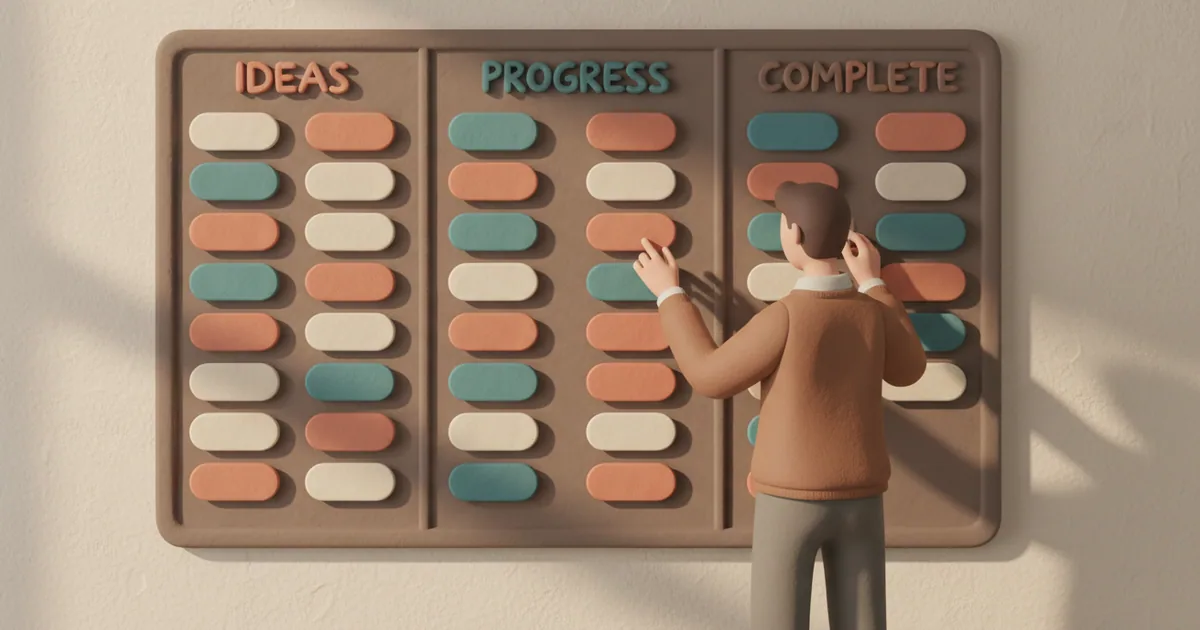

Customer Request: The Complete Guide for 2026
Key takeaway: A customer request is any feature idea, bug report, or improvement suggestion submitted by a user to your product team. Managing these requests well separates growing products from stagnant ones.
A customer request is feedback from someone who uses your product. They want something changed, added. or fixed. The request could arrive through email, support tickets. Slack messages. community forums. or a dedicated feedback portal. Most product teams drown in these requests. They scatter across channels. They get lost. The good ones never reach engineering.
| Aspect | Unstructured Requests | Structured Request System |
|---|---|---|
| Collection | Scattered across email, Slack, support | Centralized in one portal |
| Prioritization | Gut feeling, recency bias | Vote counts, revenue impact, frequency |
| Feedback loop | Manual follow-ups or silence | Automatic notifications when shipped |
| Engineering handoff | Copy-paste into issue tracker | Direct sync to Linear or similar |
| User trust | Low (requests feel ignored) | High (visible roadmap, status updates) |
Evidence block: According to a 2024 ProductPlan survey, 67% of product managers spend more than 5 hours per week manually triaging customer feedback from disparate sources. Teams using centralized feedback tools reported 40% faster time-to-decision on feature prioritization.
What Is a Customer Request?

A customer request is any communication where a user asks your product to do something it does not currently do. Or do something better. Or stop doing something annoying.
The spectrum runs wide. Small bug reports on one end. A button does not work on Safari. The export file has a formatting issue. Strategic feature asks on the other. Enterprise customers want SSO. Power users want API access.
Requests come through predictable channels. Support tickets generate the highest volume. Email threads from sales contain the highest-value context. Slack messages from beta users carry the most urgency. Community forums surface the most creative ideas.
The problem is fragmentation. A single feature might get requested 47 times across 6 channels. Without aggregation, your product team sees 47 isolated asks instead of one obvious priority.
Smart teams treat requests as data, not interruptions. Each request carries signal about user behavior, market positioning. and competitive gaps. The CEO asking for a dashboard tweak matters less than 200 customers asking for the same integration.
The lifecycle follows a predictable arc. Submission happens first. Then triage, where someone decides if the request is valid. duplicate. or out of scope. Approved requests enter prioritization. Prioritized requests become work items. Completed work items trigger user notification. That last step matters most. Users who never hear back stop submitting requests. They also stop trusting your product.
The best request systems do three things. They collect feedback in one place. They connect approved requests directly to engineering workflows. They close the loop when features ship.
Customer Request: Best Practices

Centralize collection immediately. Stop accepting requests through email, DMs. and random Slack channels. Point every submission source to one intake system. The specific tool matters less than the single-entry-point discipline.
Require structured submissions. Free-form text boxes generate garbage. Add fields for use case, current workaround. business impact. and urgency. Structure enables filtering. You can query "all requests tagged integration from enterprise accounts" instead of reading 300 descriptions.
Deduplicate aggressively. The same feature requested 50 times should be one item with 50 votes, not 50 items cluttering your backlog. "Dark mode" and "night theme" and "reduce eye strain option" are the same request.
Separate triage from prioritization. Triage asks: is this request valid, clear. and within scope? Prioritization asks: when should we build this relative to everything else? Support teams excel at triage. Product managers own prioritization.
Weight requests by customer value. A request from a $50,000 ARR enterprise account carries more signal than the same request from a free user. If you can only build 10 features this quarter, the ones driving retention for your best customers deserve attention first.
Make your roadmap public. Users who can see what is planned, in progress. and shipped trust your team more. They stop asking "when will you add X" because the answer is visible. Public roadmaps also reduce duplicate requests.
Close the loop without exception. When you ship a requested feature, notify every user who asked for it. This single action generates more goodwill than any marketing campaign.
Sync requests to your issue tracker. Product teams live in Linear, Jira. or GitHub Issues. Approved requests should flow directly into engineering workflows. Two-way sync keeps statuses accurate across both systems.
Say no explicitly. Requests you will never build deserve clear rejection. A public "not planned" status respects user time. Explain why when possible.
Founder's Opinion
Most teams overcomplicate request management. They build elaborate scoring matrices. They debate prioritization frameworks. They run customer advisory boards. Then they ship the same features they would have shipped anyway.
The simpler approach works better. Collect everything in one place. Let users vote. Sort by vote count weighted by customer value. Ship the top items. Notify voters.
Vote-based prioritization gets criticized as populism. These criticisms assume you weight all votes equally. You should not. A vote from a churned customer means something different than a vote from your highest-paying account. Weight accordingly.
I prefer systems that sync directly to Linear because context transfer kills momentum. A product manager who reads a request in one tool, then opens Linear. then creates an issue. then copies the description loses 5 minutes per request. That adds up to hours weekly.
The notification step is non-negotiable. Teams that ship features without telling requesters waste the relationship-building opportunity. You did the hard work. Take credit for it.
Public roadmaps scare some founders. Competitors see your plans. Users hold you to timelines. Both fears are overblown. Competitors already know your direction from your marketing and job postings. Users prefer honest timelines with occasional slips to radio silence.
Frequently Asked Questions
How do you prioritize customer requests when you have limited engineering resources?
Start with frequency and revenue impact. Count how many users requested the same thing. Weight those counts by customer value. A feature requested by 10 enterprise accounts at $30,000 ARR each represents $300.000 in retention risk. A feature requested by 100 free users represents goodwill but no direct revenue.
Add strategic alignment as a filter. Requests that move you toward your product vision deserve priority over requests that pull you sideways.
Engineering effort matters too. A high-impact feature that takes 2 days beats a medium-impact feature that takes 2 months.
What is the difference between a customer request and a support ticket?
A support ticket asks for help using existing functionality. A customer request asks for new or changed functionality.
Some tickets contain requests. A user contacts support because export is broken. During the conversation, they mention wishing exports included a specific field. The first part is a ticket. The second part is a request. Train support teams to extract and route requests separately.
How should product teams handle requests they will never build?
Mark them clearly as "not planned" or "declined" in your feedback system. Provide a brief reason when possible. Users respect honesty. They do not respect silence.
Common valid reasons include: the request conflicts with product strategy, the request serves too narrow an audience. or the request would require architectural changes beyond current scope.
How do you measure whether your customer request process is working?
Track three metrics. First, request-to-ship time. How long between a user submitting a request and the feature going live?
Second, notification rate. What percentage of shipped features trigger user notifications? If you ship features without telling requesters, your loop is broken.
Third, repeat submission rate. Do users submit multiple requests over time? Declining submissions suggest users stopped believing you listen. Increasing submissions suggest trust in the system.