Progress Examples: The Complete Guide for 2026
Key takeaway: Progress examples are concrete demonstrations of work completed toward a goal, used to communicate status to stakeholders, customers, or team members. They range from simple task completion updates to sophisticated public roadmap entries that keep users informed about feature development.
The phrase "progress examples" has two common meanings. In education, it refers to student work samples showing learning over time. In product and SaaS contexts, it means specific instances of communicating project status. This guide covers the SaaS and product management angle.
Progress examples matter because vague status updates waste time. "Making good progress" tells nobody anything. A concrete progress example says "shipped the API rate limiting feature, now in staging. production release Thursday." Teams that communicate with specificity move faster. Customers who see specific progress examples trust the product team more.
| Progress Example Type | Best For | Update Frequency | Visibility |
|---|---|---|---|
| Roadmap status changes | Feature announcements | Weekly | Public or internal |
| Changelog entries | Shipped work | Per release | Public |
| Sprint reviews | Team alignment | Bi-weekly | Internal |
| Customer-facing boards | Feature requests | Real-time | Public |
| Investor updates | Fundraising | Monthly or quarterly | Private |
Evidence block: A 2024 ProductPlan survey found that 67% of product teams using public roadmaps reported higher customer satisfaction scores compared to teams that kept roadmaps internal.
What Is Progress Examples?

Progress examples are specific instances where you show what has been accomplished, what is currently happening. and what comes next. They differ from status reports because they emphasize concrete evidence over summary statements. A status report might say "project on track." A progress example shows the actual work completed.
Consider the difference:
Bad: "We're working on performance improvements."
Good: "Reduced dashboard load time from 4.2 seconds to 1.1 seconds. Deployed to 20% of accounts Monday. Full rollout scheduled for Friday after monitoring error rates."
The second version contains measurable outcomes, concrete timelines. and observable actions. Stakeholders reading it know exactly what happened and what happens next.
Progress examples serve different audiences with different needs. Internal teams need technical details. Customers need outcomes. Investors need metrics. The skill is knowing which details matter to which audience.
For product teams using issue trackers like Linear, progress examples often live in the gap between internal tickets and external communication. A Linear issue might contain twenty comments about implementation details. The progress example for customers distills that into one sentence about what shipped and why it matters.
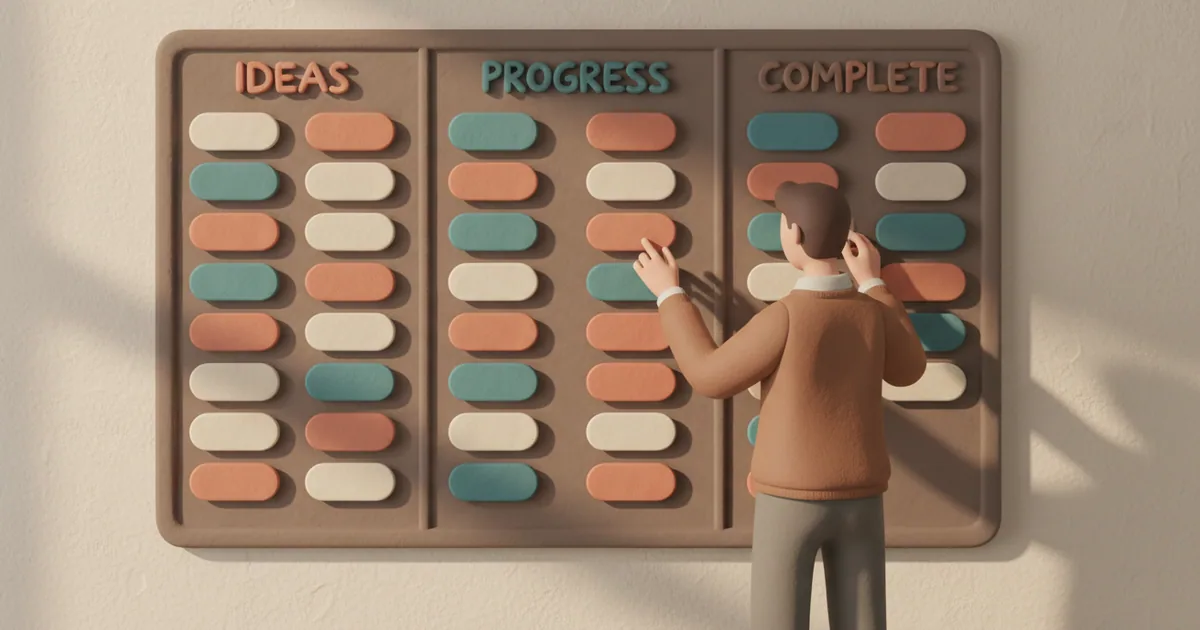
Public roadmaps turn progress examples into a continuous communication channel. Instead of sending periodic newsletters, teams maintain a living document where customers can see work move from "planned" to "in progress" to "shipped." Each status change is itself a progress example.
The mechanics vary by tool. Some teams use Notion pages they manually update. Others connect their issue tracker to a public-facing board that syncs automatically. The automation matters because manual updates create lag. A feature might ship on Tuesday but not appear on the roadmap until someone remembers to update it Friday.
Progress Examples: Best Practices
The best progress examples share three characteristics. They are specific about what changed. They are honest about what remains. They connect to outcomes users care about.
Start with the outcome, not the process. Customers do not care that you refactored the authentication service. They care that login is now faster. Lead with the benefit, then add technical context for those who want it.
Use concrete numbers whenever possible. "Improved performance" means nothing. "Reduced API response time by 340ms" means something. Numbers create credibility and accountability.
Time-bound your progress examples. "In progress" is not useful without context. "In progress since March 4, estimated completion March 18" tells stakeholders whether to worry.
Evidence block: According to Atlassian's 2023 State of Teams report, teams that share progress updates at least weekly have 23% higher project completion rates than teams that update monthly or less frequently.
Separate facts from forecasts. What shipped is a fact. What will ship is a forecast. Label them clearly. Customers get frustrated when forecasts are presented as commitments and then slip.
Create a system for capturing progress examples automatically. Manual processes break down. For teams using Linear, this means connecting Linear statuses to a public board. When an issue moves to "Done," the roadmap updates automatically. When a project ships, it can become a changelog entry.
Changelogs deserve attention as a specific form of progress example. A good changelog entry explains what changed, why it matters. and how to use it. "Fixed bug #4521" helps nobody. "Fixed issue where exports failed for accounts with more than 10,000 records" helps the people who hit that bug.
Notify the right people about the right progress. Feature request voting systems solve this by letting users follow specific items. When that item ships, only the people who cared get notified.
Founder's Opinion

Public roadmaps beat internal-only roadmaps for almost every software company.
The argument against public roadmaps usually involves competitive risk. This fear is overblown. Ideas are cheap. Execution is expensive. Your competitors already know the obvious features they should build. Seeing them on your roadmap changes nothing.
The argument for public roadmaps is stronger. Customers trust companies that show their work. Feature requests feel heard when they appear on a board others can see. Shipped features get noticed when they move through a visible pipeline.
The technical reason public roadmaps win is feedback quality. When customers can see what you plan to build, they comment on it before you build it. They tell you the edge cases. They tell you which version of the feature matters most. This feedback loop is worth more than whatever competitive advantage you think secrecy provides.
The execution risk is manageable. Do not put speculative ideas on a public roadmap. Only show work you have committed resources to. For teams worried about commitment, show work at the project level. "Q2: Reporting improvements" is a commitment you can keep even if specific features change.
The tooling matters. A public roadmap that requires manual updates will become stale. A public roadmap that syncs with your actual issue tracker stays current automatically. I have seen teams try Notion, Google Docs. and custom-built pages. All eventually fell behind. The teams that succeeded connected their roadmap directly to Linear or their primary issue tracker.
Frequently Asked Questions
How often should I update progress examples for customers?
Weekly is the minimum for active projects. Customers checking your roadmap want to see movement. If nothing moves for two weeks, they start wondering if the project is stuck. For shipped features, update immediately. Automated sync between your issue tracker and public roadmap eliminates lag entirely.
What should I include in a progress example for stakeholders?
Lead with outcomes, not activities. Include specific metrics when available. State what completed, what is currently happening. and what comes next. Add timeline estimates with confidence levels. If something is blocked, say what is blocking it. Stakeholders want to know if they need to act.
How do I handle progress examples for delayed or canceled features?
Be direct. State that the timeline changed or the feature is no longer planned. Explain why in one or two sentences. Customers respect honesty more than silence. If you promised something and cannot deliver, the progress example is "We decided not to build this because X. Here is what we are doing instead."
What tools work best for managing progress examples across teams?
The best tool is whatever connects to your actual work system. If your team uses Linear, your progress examples should flow from Linear. Manual tools like Notion or Google Docs work for small teams but break down at scale. Look for tools that sync status automatically, support public and private views. and let customers follow specific items.
How do progress examples differ from changelogs?
Progress examples cover work at any stage. Changelogs cover shipped work only. A progress example might say "API v2 is in development, 60% complete." A changelog entry says "API v2 shipped today. Here is what changed and how to migrate." Progress examples set expectations. Changelogs deliver on them. The best systems connect them so shipped progress examples automatically become changelog drafts.