
A public roadmap in Linear sounds simple until it becomes a support magnet and a commitment trap. One wrong setting and you either leak internal work or publish a vague board that users ignore. Linear can do this cleanly, but only if you treat it like an engineered interface, not a marketing page.
Chapter 1 locks down the mechanics: how to create a public-facing project and share it without exposing private issues. Chapter 2 makes the roadmap legible by defining themes and goals that map to real work. Chapter 3 turns chaos into a stable public contract with a Now–Next–Later structure that survives scope changes. Chapter 4 covers the part most teams fake: prioritization with feedback, so you can show receipts without letting every loud request hijack the queue.
Linear Public Roadmap Setup: Fix Permissions Before You Share a Single Link
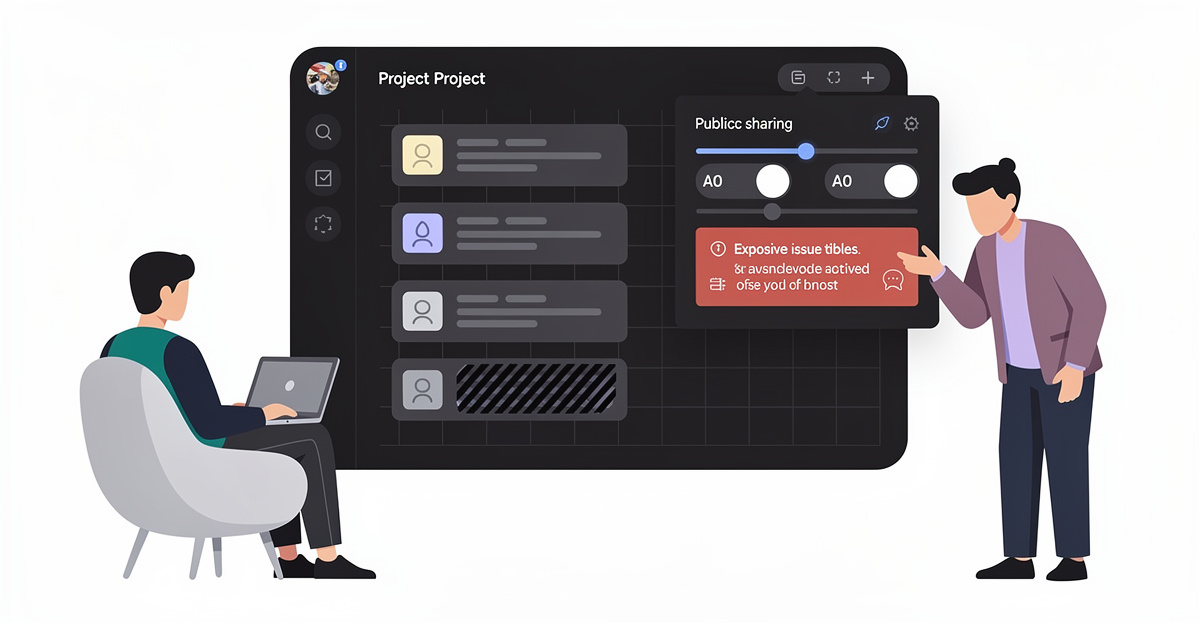
The fastest way to kill a public roadmap is to ship it with the wrong permissions. The second fastest is to “fix it later” after someone has already seen internal plans.
When you build a public roadmap in Linear, treat sharing as an access-control problem first. Public roadmaps fail when teams overshare by default, rely on open links, or blur internal and external visibility. It gets worse as the team scales. Permissions sprawl without audits. Old links keep working. Editors accumulate. Nobody knows who can change what. The result is either oversharing or a roadmap nobody can trust.
Set roles early and make them explicit. You need clear viewer vs editor vs owner boundaries, plus accountability for who approves public changes. Many tools push you toward broad access patterns, like public channels or unrestricted link sharing. That’s where sensitive plans leak. You want the opposite: least privilege, simple sharing tiers, and a review step before anything becomes public.
Also separate ideas from committed features. Some roadmap systems only show ideas internally, then make items public when they’re promoted to features. That distinction matters. If you don’t enforce it, you’ll publish uncommitted work and spend the next quarter doing damage control.
Finally, do basic hygiene. Use version history, activity logs, and approvals workflows that match the risk. Run periodic permission audits so your roadmap doesn’t drift into chaos.
How Feedvote solves this
Feedvote gives you a controlled path from customer input to what you expose publicly, without turning Linear into an open mailbox. With the two-way Linear sync workflow, you can keep internal triage internal and only surface what you’ve reviewed. That reduces the “internal vs public mismatch” that breaks trust. If you’re considering general-purpose tools like Airtable or promotion-based roadmaps like Pendo, the tradeoff is more configuration and more surfaces to secure; Feedvote keeps the workflow tighter so you publish intentionally.
Once permissions and sharing tiers are locked, you can safely move to the next step: defining themes and goals so the public view has a clear structure.
Themes + Goals in Linear: Build an Information Architecture Your Public Roadmap Can Survive
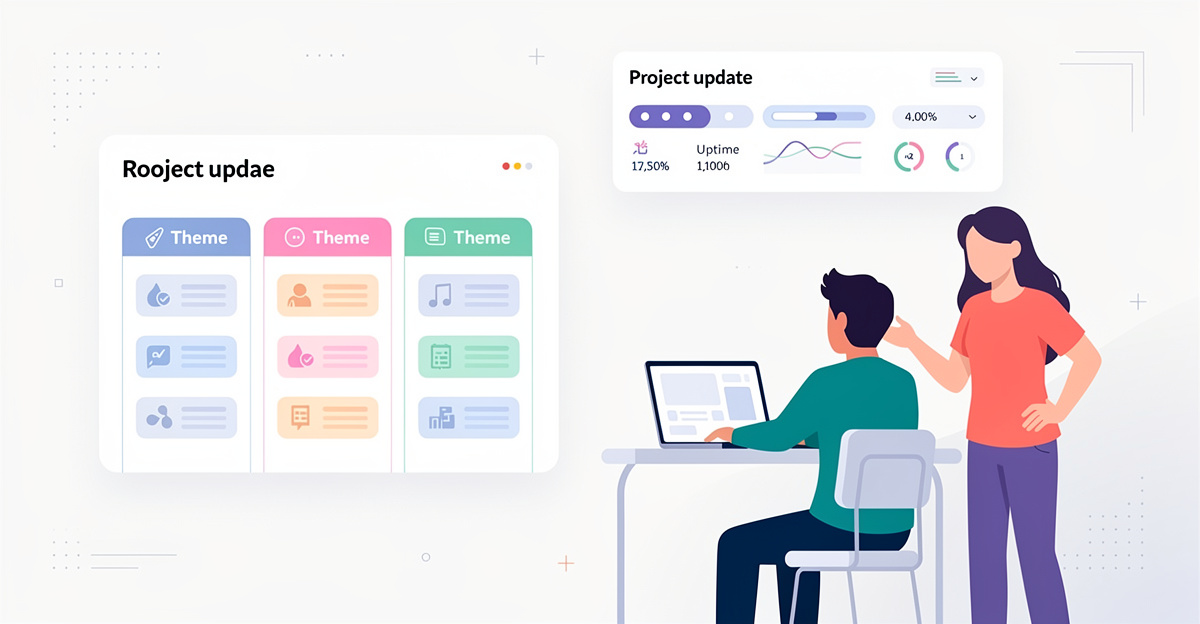
You’ll publish a Linear roadmap, then spend weeks explaining what every item “means.” The work isn’t the roadmap. It’s the missing information architecture behind it.
A public roadmap needs an IA: a deliberate way to organize, structure, and label themes and goals so outsiders can navigate it. Without that, your “themes” become vague buckets, and your “goals” become untraceable promises. Start by forcing alignment between strategy and what you can actually execute. In enterprise architecture terms, that’s business architecture (strategy, processes, governance) feeding clear themes like compliance or scalability. Then use business capability modeling and value stream mapping to connect business activities to the systems that support them. This is where themes stop being slogans and start mapping to concrete gaps, redundancies, and high-ROI changes.
Next, define a target state and run gap analysis against the current state. The only goal that matters on a public roadmap is one you can explain as “current → target,” with the obstacles in between. Roadmapping is the sequence of transition architectures: initiatives with dependencies and ordering. That ordering is your future input to Now–Next–Later.
Treat the roadmap as a repository, not a slide deck. Store consistent labels, standards, and diagrams as live data, so updates don’t drift. Frameworks like TOGAF and notation like ArchiMate exist for a reason: traceability from business outcomes to implementation detail. Governance matters too, including review boards and automated enforcement (“governance as code”).
How Feedvote solves this Themes and goals fall apart when feedback is scattered. Feedvote keeps customer inputs tied to the same structures you publish in Linear. That gives you a clean path from “theme” to “goal” to the requests that justify it. With a Linear feedback portal with 2-way sync, the public roadmap stays navigable because the underlying labels stay consistent.
Now–Next–Later in Linear: A Public Roadmap Without Fake Dates
Your public roadmap breaks the moment you publish a date you can’t hit. Then you spend the next quarter doing roadmap triage instead of shipping.
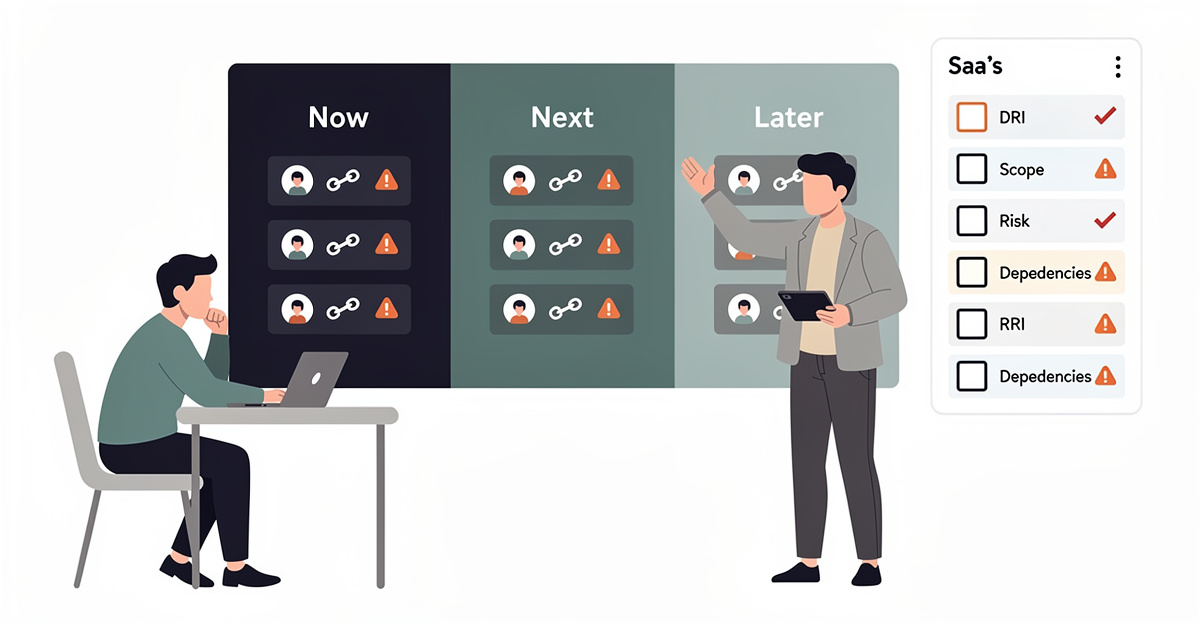
After you’ve defined themes and goals in Linear, you need a structure that communicates priority without pretending you can forecast every dependency. Now–Next–Later does that by sorting initiatives into time horizons instead of hard dates. Now is what’s in progress or about to start. These are the items your team is actively touching, so you can share an expected launch date or timeframe. Next is planning work. Once preparation is done, items move into Now, get an expected delivery window, and often get split into smaller pieces. Later holds larger, future initiatives. When they become real, you break them down before promoting them to Next.
The point is not to dodge accountability. The point is to stop publishing deterministic dates when plans will change. Broad categories accept that roadmaps are agile documents. They can, and should, shift as conditions change. Relative positioning gives customers a truthful signal: what matters most, what’s queued, and what’s exploratory.
Treat the roadmap as a living document. Update it regularly. Add clear goals, success metrics, and risk flags. Assign explicit ownership for each initiative so it’s actionable, not vague. Pair stakeholder feedback with usage data to validate priorities. Use continuous forecasting and real-time signals to surface delivery risk early, while you still have options.
How Feedvote solves this Feedvote helps you keep your public roadmap grounded in what users are actually asking for. When feedback stays connected to Linear work, Now–Next–Later stops being a labeling exercise. Stakeholders can see movement without you writing date apologies. Use a workflow like this Linear feedback portal with 2-way sync so requests stay tied to initiatives as they move between columns.
Linear Public Roadmap Prioritization: If Feedback Isn’t Linked to Work, It’s Just Noise
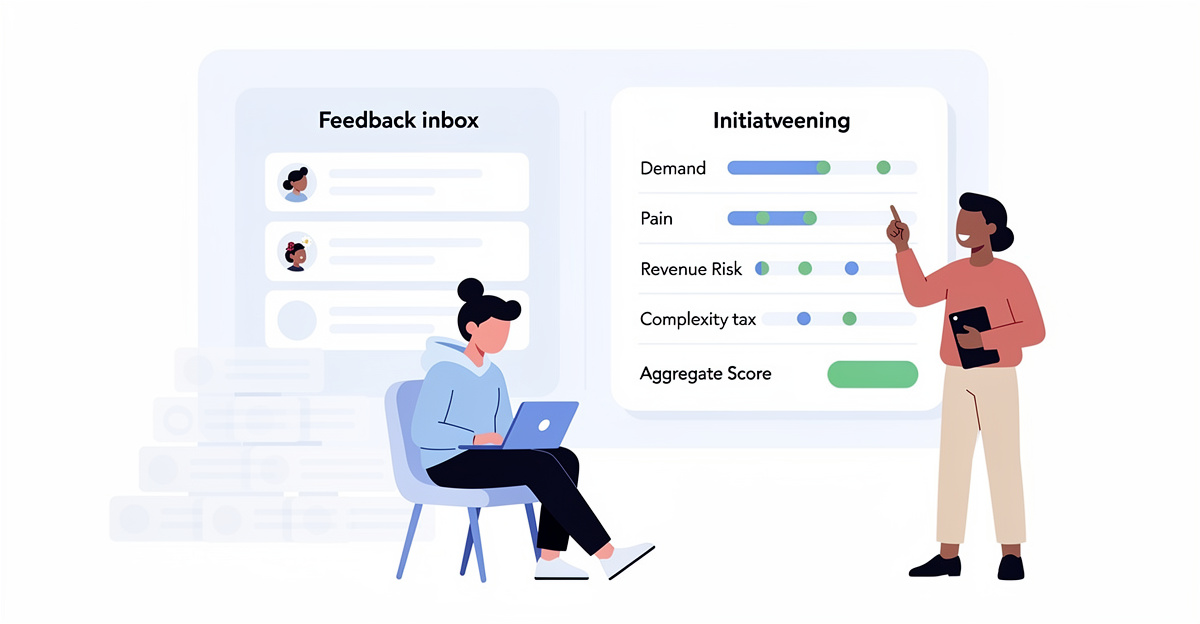
You’ll drown in “+1” comments and Sales escalations if they don’t map to real work. Your public Linear roadmap will look active, but nothing will ship.
In Linear, a public roadmap only earns trust when every request is traceable to a work item, a priority decision, or a measurable outcome. Otherwise it becomes theater: lots of discussion, no execution, and no way to explain tradeoffs. The fix is simple and strict. Every incoming request must attach to something that can be planned: an initiative, a project, an issue, or an explicit metric you intend to move. If it can’t be linked, it’s not roadmap input yet.
When you do the actual prioritization, use a framework that forces comparability. RICE, MoSCoW, WSJF, or revenue-based scoring all work because they rank by impact and effort. Pick one and apply it consistently during a recurring review loop. A bi-weekly review or sprint demo is enough structure to prevent backlog drift. Pull in the same sources each cycle—surveys, NPS, support tickets, product tests—and decide what changes in the backlog. If nothing changes, say so, and document why.
Tools like Canny or Airfocus help centralize requests, add voting, and reduce duplicates. The tradeoff is another system to reconcile with Linear. If your feedback tool can’t keep a clean link to Linear work, you’ll spend your time syncing states instead of building.
How Feedvote solves this Feedvote is built around keeping feedback tied to Linear work, so requests don’t float in a separate universe. You capture feedback with enough context to evaluate it, then link it directly to the items you’ll actually ship. That makes prioritization conversations concrete, because every “vote” points to a real delivery path. Here’s the workflow for a Linear feedback portal with 2-way sync: https://blog.feedvote.app/linear-feedback-portal-2-way-sync/
The public roadmap then becomes a visible chain: request → prioritized work → shipped change → observed outcome.
Final thoughts
Building a public roadmap in Linear is mostly about controlling failure modes. Permissions stop you from publishing internal mess. Themes and goals stop you from publishing meaningless lists. Now–Next–Later stops you from shipping fake deadlines that turn into broken promises. Prioritization with feedback links stops you from running a public suggestion box with no accountability.
The winning pattern is boring on purpose. Keep the public surface small. Keep intent clear. Keep updates on a fixed cadence. Show why work moves, and why work doesn’t. Publish measurable outcomes when possible, like latency targets or reliability thresholds. That level of specificity earns trust with technical buyers and reduces support churn.
If your Linear public roadmap becomes hard to maintain, that’s not a sign you need more process. It’s a sign you need better plumbing between feedback and issues. Automate the wiring, keep humans on judgment, and your roadmap stays credible.
Sign up for Feedvote today and automate your Linear public roadmap with 2-way sync—grab the lifetime deal before it's gone.
Learn more: https://feedvote.app
About us
Feedvote is a customer feedback + public roadmap platform. It replaces Canny and Productboard for teams who want less bloat, lower cost, and faster workflows. It integrates deeply with Linear, but works as your source of truth for feedback. You collect and dedupe requests, group them into initiatives, and push the right work into Linear with 2-way sync so status changes and progress stay consistent across both systems.