
Customer feedback used to be a text box and a spreadsheet. Now it is audio from sales calls, video from user tests, and app reviews in five languages. The 2026 reality is brutal. If your feedback tool cannot classify, dedupe, and route this mess in near real time, you ship the wrong thing. Teams also keep overbuying bloated enterprise graveyards, then wonder why nothing connects to the roadmap.
This piece stays focused on AI customer feedback tools for 2026. Chapter 1 tracks the technical evolution that made LLM-driven triage possible. Chapter 2 maps the AI features that matter, with concrete tool behaviors and outcomes. Chapter 3 deals with privacy, because GDPR 2.0 style requirements turn “send it to a model” into a legal outage. Chapter 4 names the market leaders and calls the shots on integrations and pricing, because usage-based bills will hit your P&L like a webhook storm.
AI Customer Feedback Tools in 2026: The Shift from Keyword Buckets to Agent Pipelines That Take Action
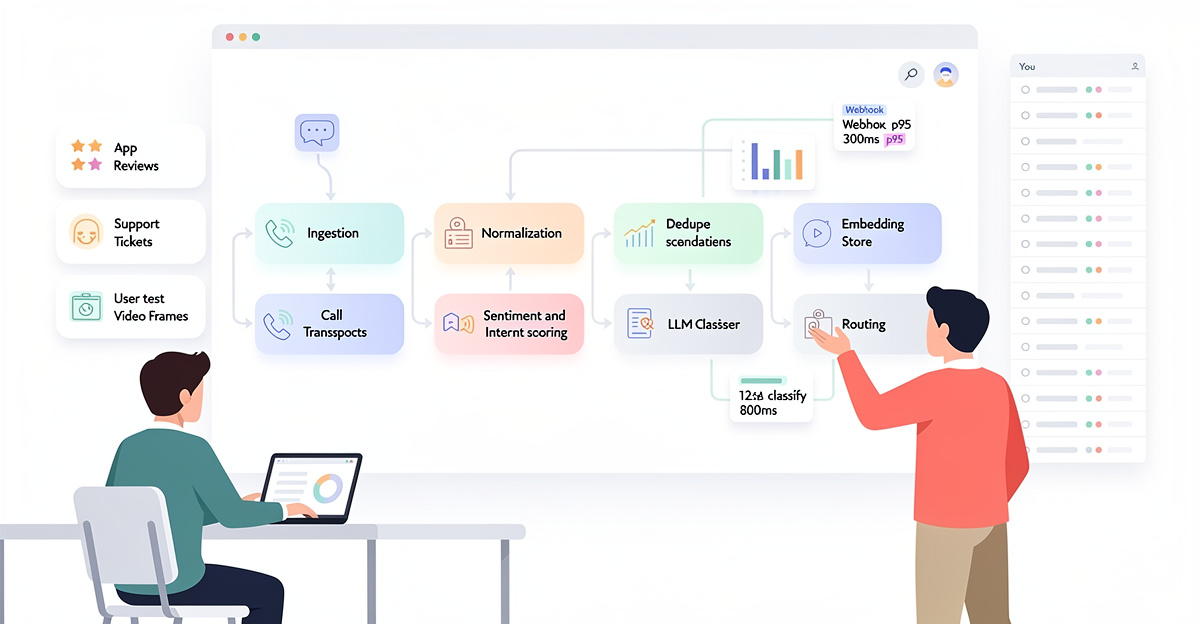
Your feedback stack breaks down when “insights” stop at a dashboard. Teams still copy-paste quotes into docs, then argue about what to do next.
AI customer feedback tools got here by moving from text storage and keyword matching into systems that can plan and execute. The early generation was rule-based. Decision trees in the 1960s and pattern matching chatbots like ELIZA (1966) and ALICE (2000s) could only map keywords to canned outputs. That model worked for tagging themes, but it never understood intent. It also could not adapt when customers wrote in messy, ambiguous ways.
The 2010s introduced more practical NLP. Sentiment analysis and entity extraction let tools detect emotional tone and pull out product names and titles. That enabled conversational interfaces, plus task-style assistants like Siri (2010), Google Assistant (2012), and Alexa (2015). Useful, but still limited. They were not built to own multi-step outcomes.
The 2020s pushed feedback tools into LLMs and agentic systems. ChatGPT’s release in November 2022 made advanced LLM behavior mainstream, and showed how flexible models can be with contradictory prompts. The real product shift is agents. Traditional LLMs answer. Agentic LLMs plan, call APIs, maintain memory across interactions, and verify results with minimal human oversight. In feedback workflows, that moves you from “customer said X” to “agent processed return, changed order, or troubleshot issue,” while escalating edge cases to humans.
How Feedvote solves this Feedvote keeps the workflow anchored in execution, not summaries. You capture feedback where teams already work, then route it into a system that supports decisions and follow-through. That reduces the gap between raw input and shipped changes. If you need a practical starting point, use this guide to set up a feedback intake flow in Teams: Microsoft Teams for product feedback setup and best uses.
AI Customer Feedback Tools in 2026: Features That Move Work From “Insight” to Shipped Changes
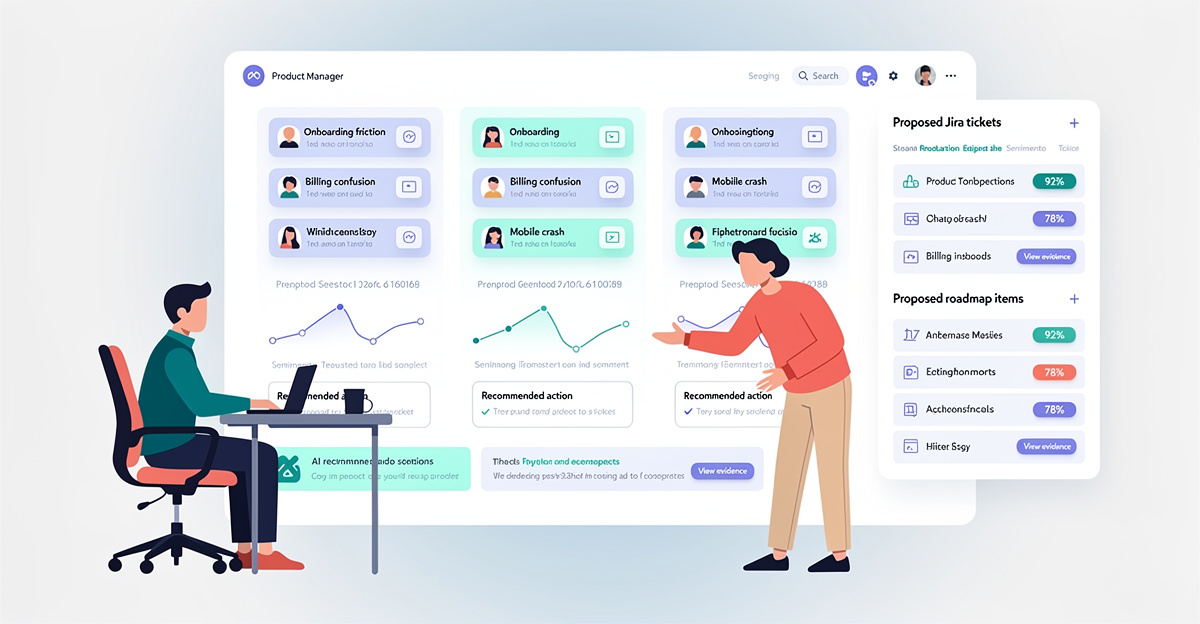
You don’t have a “feedback” problem in 2026. You have a handoff problem between feedback, triage, and the backlog. Teams still waste hours rewriting the same complaints into tickets, then arguing about priority with weak evidence.
What actually ships in AI customer feedback tools now maps to four capabilities that reduce that handoff cost. Agentic workflows are the biggest shift. Instead of summarizing comments, agents can break work into steps, execute across systems, and escalate when confidence drops. The research cites 40–60% manual work reduction in ops-heavy environments (McKinsey 2026) and notes that many Fortune 500 pilots moved into production by late 2025 (Gartner Q4 2025). For feedback programs, the practical bar is simple: the agent must persist state, keep context, and produce an auditable trail of what it did.
Multimodal reasoning matters because real feedback is no longer just text. It includes screenshots, screen recordings, voice notes, and short videos. Models that can ingest mixed inputs reduce the “can you reproduce this?” loop. RAG 2.0 with long-term memory is the reliability layer. It pulls from internal docs and prior decisions, and it cites sources to control hallucinations; the research claims higher enterprise query accuracy than base models (Stanford HELM 2026). Finally, predictive analytics and simulation agents start to show up when teams need forecasts, not summaries, with accuracy ranges claimed in the research.
Salesforce Einstein Agents is the clean case study pattern: agentic execution embedded in a core workflow, backed by RAG, with published business outcomes (Salesforce FY2026 Q1 earnings and demos). That’s the template feedback tools need: route, qualify, draft, and escalate—then log why.
How Feedvote solves this Feedvote focuses on the last mile: turning incoming feedback into a prioritized, team-owned workflow. It keeps feedback tied to decisions, not just sentiment. When you sync to delivery tools, you reduce manual rewriting and loss of context. If you’re running Linear, start with this guide on a Linear feedback portal with 2‑way sync so AI triage ends as a real backlog change, not a slide deck.
Compared with enterprise suites like Qualtrics XM, Medallia, or Clarabridge, the tradeoff is breadth versus speed. Those platforms cover more channels and governance, but they can add process weight before anything ships. Feedvote is the better workflow when your goal is tight feedback-to-roadmap execution.
AI Customer Feedback Tools in 2026: Multimodal Data Meets GDPR 2.0 “Technical Truth”
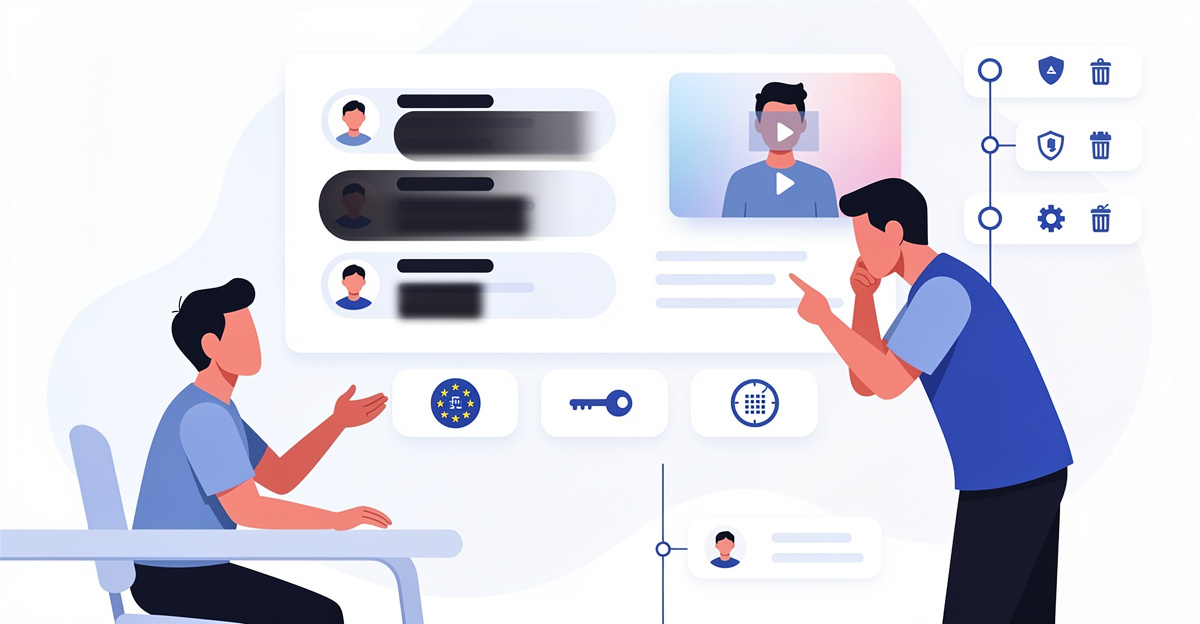
Your feedback pipeline is now a compliance pipeline. If your AI feedback tool can’t prove what it collected, why, and where it went, you’re shipping risk.
In 2026, “GDPR 2.0” isn’t a new statute. It’s regulators enforcing the existing GDPR harder, plus the EU AI Act becoming fully applicable on August 2, 2026. The enforcement pattern is blunt: Article 83 still sets the fine tiers (€10M/2% for procedural issues, €20M/4% for core violations like no lawful basis or mishandling special category data). DPAs are also faster to issue warnings and processing bans. The big shift is how violations get proven. Research points to network scans and verifiable backend behavior replacing policy PDFs, ending “privacy theater.”
Multimodal customer feedback adds fuel. Feedback isn’t only text fields anymore. It includes browser signals, consent events, and behavioral data tied to a user’s rights requests. Global Privacy Control (GPC) signals are becoming legally binding in enforcement contexts, and ignoring them can trigger investigations. User rights still have the one-month response clock. So your “feedback insights” system needs real workflows for access, rectification, erasure, portability, and opt-outs from profiling or sales. It also needs audit-ready logs: consent timestamps, data discovery and classification, and proof that backend processing matches stated policy. For cross-border transfers, you’re still living with post-Schrems II controls: SCCs plus extra safeguards.
How Feedvote solves this Feedvote keeps the feedback workflow tight, so consent and rights handling don’t become side projects. You can route and manage feedback in a way that supports audit trails instead of ad-hoc exports. That matters when regulators want “technical truth,” not a slide deck. If you also run product work in Linear, pair this with Feedvote’s guide on a Linear feedback portal with 2-way sync to keep feedback processing controlled and traceable.
Qualtrics XM, Medallia, and Clarabridge are built for large deployments, but that scale often means heavier governance overhead. Feedvote is the better workflow when you need compliance-friendly feedback ops without turning the tool into a program.
2026’s Winners in AI Customer Feedback Tools: Integration Gravity Meets Usage-Based Pricing
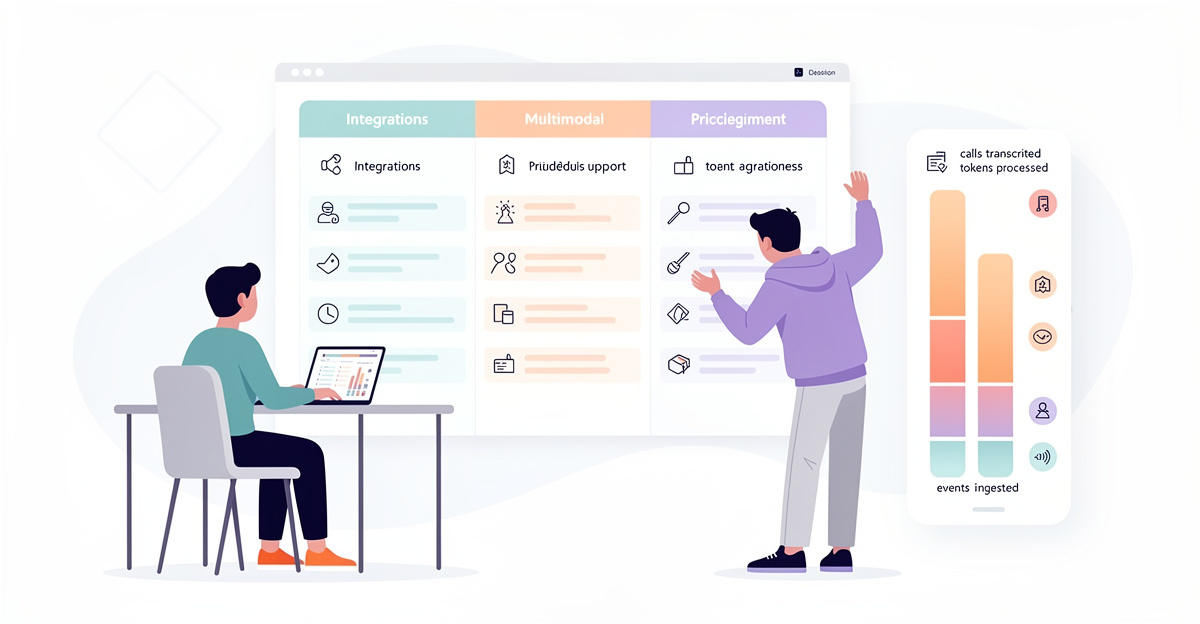
If your feedback tool can’t push insights into the systems your team already lives in, it becomes a dashboard nobody checks. If pricing doesn’t track actual feedback volume, you either ration usage or eat surprise spend.
By 2026, market leaders in AI customer feedback tools win on two forces: integration gravity and usage-based pricing. Integration gravity is the pull toward tools that sit inside CRM, support, analytics, and team comms. The research points to common targets like Salesforce, Slack/Teams, and Google Analytics. The leaders make insights actionable where work happens, not where reports live. On pricing, usage-based models charge by responses, analysis credits, or processed items. That lowers entry friction and scales as feedback volume grows.
Qualtrics XM leads with 100+ integrations and hybrid usage tiers priced per response or analysis. Medallia follows with 80+ integrations and pure usage pricing per feedback item or AI insight. Clarabridge (now XM Discover) stays strong in unstructured feedback, with usage-based credits for sentiment analysis and growing gravity after its Qualtrics tie-in. MonkeyLearn (part of Medallia) shows how usage pricing can work for SMBs, pairing no-code APIs with wide connectivity via Zapier. Insight7 is positioned around qualitative formats like audio/video, with pay-per-interview AI summaries and integrations that fit async product workflows.
The thread is sticky workflow embed + cost that tracks usage. Leaders use integrations to reduce churn and make adoption harder to roll back. When teams connect feedback to execution tools, the “cost” of switching rises. If you’re routing feedback into collaboration flows, a practical example is a Microsoft Teams setup for product feedback.
How Feedvote solves this Feedvote is built around the same reality: feedback only matters when it lands in the team’s existing workflow. It focuses on making collection and prioritization easier to operate day to day, not just easier to buy. Compared to enterprise suites like Qualtrics XM or Medallia, Feedvote is the better workflow when you need fast adoption without heavy platform overhead. You get a tighter loop between incoming feedback and what the product team does next.
Final thoughts
AI customer feedback tools in 2026 are not note-taking apps. They are event-driven systems that ingest messy signals, run multimodal analysis, and push decisions into delivery tooling. If you treat them like a mailbox, you get stale tagging and random prioritization. If you treat them like a pipeline, you get repeatable triage.
The technical direction is clear. Agents will propose actions, but you still need evidence links and audit logs. Multimodal support will be table stakes, because voice and video are where product truth hides. Privacy will keep tightening, so plan for redaction, retention controls, and region-bound processing. Pricing will keep shifting toward usage, which means you must model token, transcription, and event volume up front.
Pick a tool that integrates with your stack, enforces data discipline, and stays predictable under load. Otherwise you are just funding another bloated enterprise graveyard with nicer charts.
Stop feeding a bloated enterprise graveyard. Switch to Feedvote today to get AI-powered feedback prioritization and a public roadmap that your team will actually maintain.
Learn more: https://feedvote.app
About us
Feedvote is a customer feedback and public roadmap platform designed for modern SaaS teams. It centralizes user requests, deduplicates and prioritizes feedback, and publishes a roadmap customers can trust. It is built to fit a startup stack, so you can collect feedback, decide faster, and ship without running a heavyweight process or paying for features you will never use.