
Manual feedback intake isn’t “scrappy.” It’s data loss with a UI. By 2026, your feedback system is part of your product infrastructure, not a side doc that dies in Notion. The best customer feedback management software now ships with AI tagging, sentiment scoring, and automation that keeps routing tight and auditable. But tool choice still fails for one boring reason: bad integration contracts. If your CRM, issue tracker, and analytics pipeline can’t share identifiers, you end up with duplicate customers, orphaned requests, and fake prioritization.
Chapter 1 maps the platforms worth evaluating and the common failure modes. Chapter 2 covers AI and integration mechanics, plus where “AI insights” become expensive noise. Chapter 3 focuses on omnichannel intake tied back to CRM identity, so you can measure revenue impact. Chapter 4 gets into predictive analytics and generative AI, and how to keep it grounded in real data rather than vibes.
Top Customer Feedback Management Software for 2026: The Shortlist That Ships, and the Bloat That Slows You Down
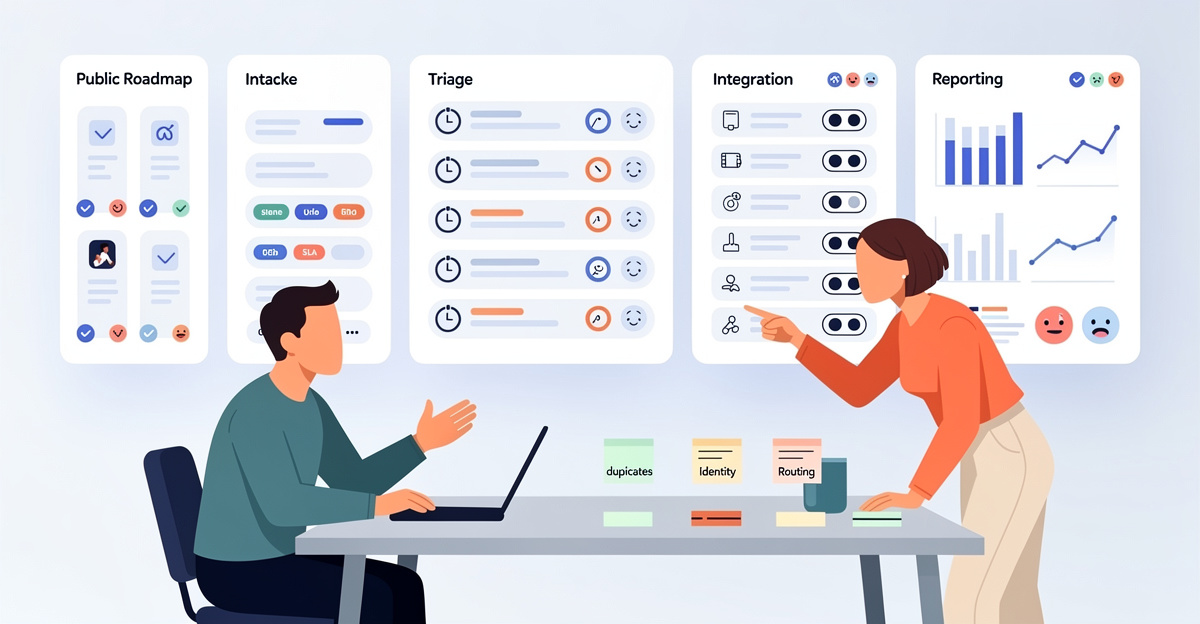
You buy a “feedback platform” and end up running a second CRM. The team stops using it because every workflow needs admin time.
For a 2026 shortlist, focus on tools that repeatedly show up for review automation, AI analytics, and multi-channel collection: Birdeye, ReviewFlowz, Qualtrics, Medallia, and AskNicely. Birdeye is frequently ranked #1 or #2 for AI-powered review management across 200+ sites, which matters if reviews are your primary inbound signal. ReviewFlowz stays narrower: AI review analytics, AI replies, and real-time sentiment, with published pricing and a 14-day trial. On the enterprise side, Qualtrics and Medallia are positioned as Market Leaders for scaling analysis across channels, but that scale usually implies heavier setup and IT involvement. AskNicely sits in the NPS and retention-feedback lane, which can be useful when you want a single metric flow.
The bloat traps are predictable. Some platforms bundle social publishing and broader CRM features; that can be fine, but it inflates cost and ownership if your goal is lean feedback. Enterprise-oriented tools can also carry configuration overhead that smaller teams can’t justify. Then there are niche add-ons—widgets, loyalty, visual review bells and whistles—that create dashboard noise when you just need clean intake and routing. Pricing minimums are another trap; tools with higher per-user costs can fail basic startup economics.
How Feedvote solves this Feedvote stays centered on feedback capture, triage, and decision-making, without dragging your team into a marketing suite. You get a workflow that’s designed for product teams, not reputation management teams. It keeps the signal-to-noise ratio high, so “actionable” stays literal. If you’re trying to close loops instead of collecting dashboards, use Feedvote to close the feedback loop and drive action—then add heavier platforms only when you can prove the ROI.
AI-Powered Feedback Software in 2026: Tag Everything Fast, Then Fight the Data Contract War
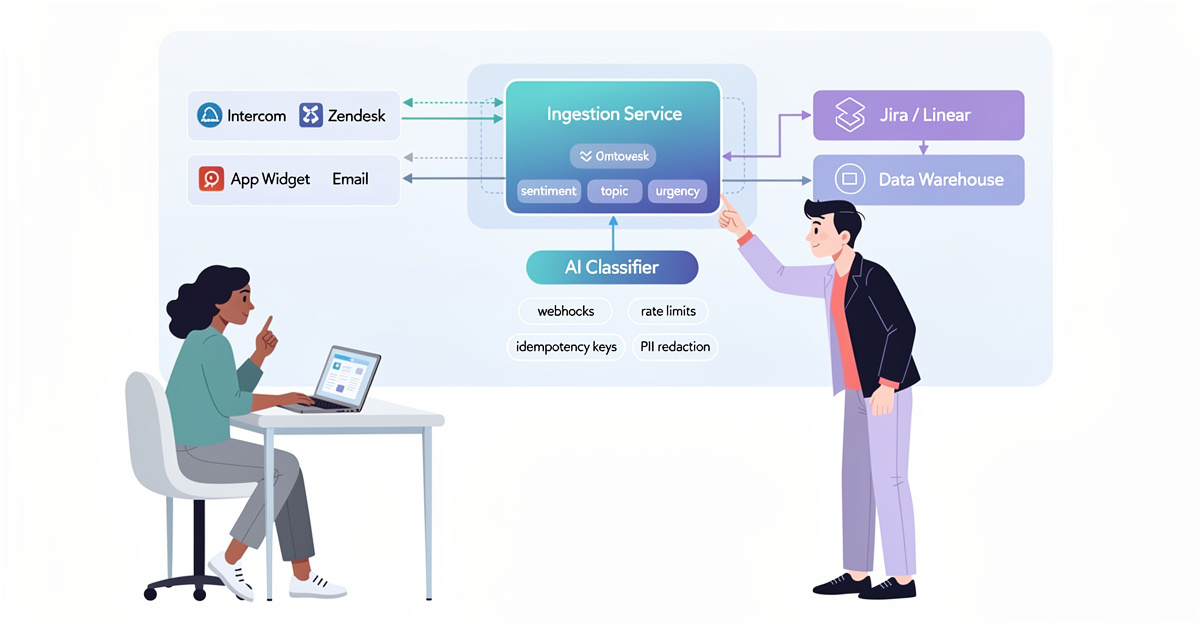
Your feedback tool will happily auto-tag every message in seconds. Then your team spends weeks arguing about schemas, ownership, and what “good data” even means.
In 2026, AI inside customer feedback management software is moving from pilots to production-grade deployment. That shift changes what “integration” means. It’s no longer just pushing tickets into a tracker. It’s supporting agentic systems that can run multi-step workflows across APIs, plus multimodal models that can read text, images, and audio. Low-code and automation make tagging and classification feel solved. But the moment you rely on that output for prioritization, routing, or reporting, you hit the hard part: data contracts.
A data contract is a formal agreement on data formats, schemas, quality expectations, and SLAs. In feedback operations, that’s the difference between “AI labeled this as a bug” and “this bug label is valid across sources, stable over time, and safe to act on.” Contracts lag because governance and privacy are real constraints. Integration exposes gaps in schema enforcement and interoperability. Multimodal inputs raise the bar further, because transparency and bias controls get harder when more data types enter the pipe.
Tools selling “AI tagging” are optimizing the easy layer. The durable ROI comes from treating feedback data like a product: curated, monitored, and contract-backed. If you want AI to automate routine operations, you need predictable inputs and measurable quality.
How Feedvote solves this Feedvote keeps feedback structured at capture time, so tagging isn’t your only control point. It gives teams a consistent place to normalize fields and categories before they hit downstream systems. That reduces schema drift when you connect other tools. It also makes it easier to define and enforce expectations across the feedback lifecycle, not just at export.
For a concrete workflow, see Feedvote’s guide on closing the feedback loop with action.
Omnichannel + CRM Integration in 2026: If It’s Not One Customer Record, It’s Not Feedback Management
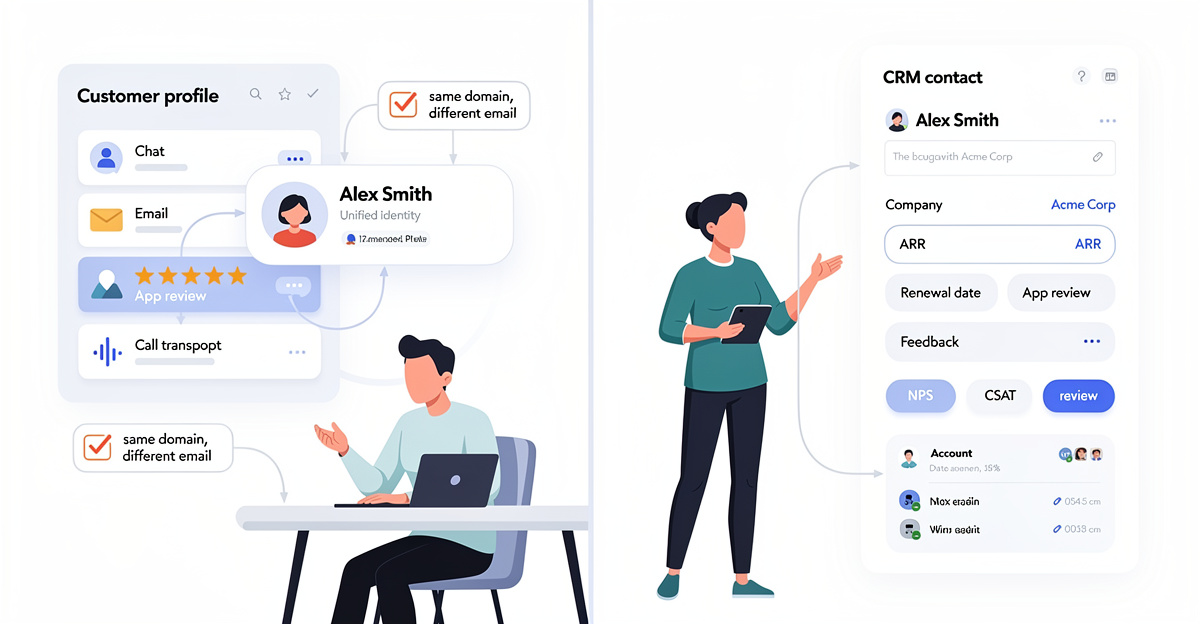
Your feedback pipeline breaks the moment a customer switches channels. You end up with duplicates, missing context, and agents asking the same questions again.
In 2026, omnichannel support matters in customer feedback management software only when it produces a single, current customer record inside your CRM. That’s the practical line between omnichannel and multichannel. Omnichannel runs on integrated technology—cloud communication systems, CRM platforms, and APIs—that supports real-time data flow and a centralized place to manage every interaction. Multichannel is just more inboxes, with separate platforms per channel and fragmented customer data.
When CRM integration is done right, “customer history, notes, and interactions” stay in one place and stay up to date. The payoff shows up in the workflow. Customers can start on chat and move to video without repeating themselves, because the agent can see the full interaction history and context. Teams also stop hunting across apps for prior conversations, which drops response times. And consolidation isn’t just a nice-to-have: businesses moving to unified platforms report operating cost reductions of 30–50%.
This is not theoretical. Established platforms like Salesforce, Zendesk, and HubSpot offer native integrations aimed at unified records. The tradeoff is implementation effort. If you wire channels to the CRM loosely, you get partial histories and conflicting profiles. If you connect them deliberately, you get harmonized data that turns into insights you can actually use.
How Feedvote solves this Feedvote is built for the “one record” reality, not the multichannel mess. It keeps feedback tied to real customer context, so teams can act without re-triaging the same issue across tools. That makes handoffs cleaner when support, product, and success all touch the same account. For closing the loop, pair this with Feedvote’s workflow on closing the feedback loop into action, where the unified record becomes the system of execution.
Top Customer Feedback Management Software for 2026: Predictive Forecasts + Generative AI That Doesn’t Make Stuff Up
Your feedback backlog is already too big. If your “AI insights” can’t cite the underlying feedback, you’re just shipping guesses.
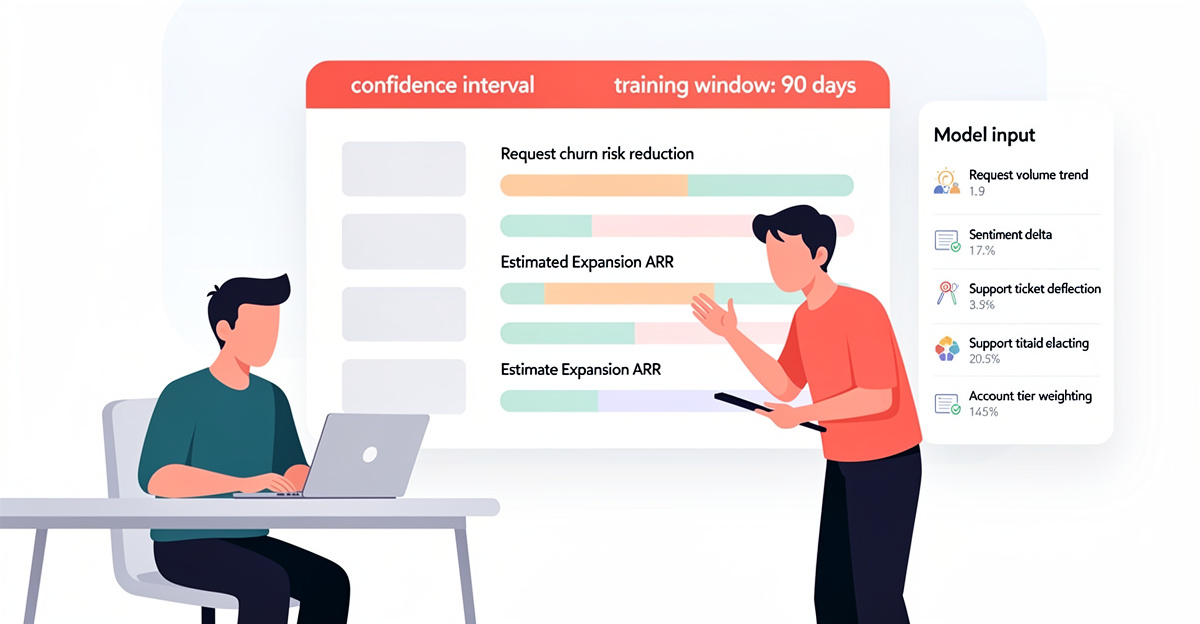
Predictive analytics is the part of customer feedback management software that turns yesterday’s signals into tomorrow’s risk calls. It uses historical patterns across surveys, support tickets, reviews, and chat logs to forecast outcomes like churn risk, satisfaction drops, and likely issue escalations.[1][4][5] That matters because you can plan capacity, catch frustration earlier, and route work before the spike hits.[1] In practice, teams forecast support demand, project KPIs like CSAT or AHT, and set proactive alerts when feedback themes start trending.[1][4] The underlying models vary. Random Forest helps when feedback variables are messy and intertwined, while generalized linear models trade raw power for speed and interpretability.[3] XGBoost is used when volume and speed matter for high-throughput forecasting.[3] Whatever you choose, the workflow has to include training splits, evaluation metrics like accuracy and F1 score, and ongoing refinement as patterns shift.[2][3][6]
Generative AI is the second half of the stack. Used well, it structures and summarizes unstructured feedback with NLP: sentiment, themes, intent clusters, and consistent categorization at scale.[4] Used badly, it hallucinates. The mitigation is not “better prompts.” It’s constraining generation to verified inputs and pairing it with predictive outputs grounded in historical outcomes.[1][4] That’s how you get recommendations and next-best actions without fabricated “insights.”[1][4]
How Feedvote solves this Feedvote keeps AI analysis tied to the source feedback, so summaries stay auditable. It helps you move from raw text to structured themes you can actually forecast against. You can then act on projected trends with alerts and prioritization, instead of chasing anecdotes. If you’re building an AI-heavy stack, start with how the tool turns feedback into decisions, not how pretty the generated text looks. For more on tool selection, see Feedvote’s guide on AI customer feedback tools in 2026.
Final thoughts
Customer feedback management software in 2026 is either a force multiplier or a slow-motion outage of your decision process. The difference is boring: identity, integrations, and auditability. If the platform can’t dedupe users, preserve source context, and push clean artifacts into Jira or Linear, your backlog becomes a bloated enterprise graveyard with nicer colors. AI helps, but only when it is tied to deterministic rules. Use AI for classification, summaries, and routing suggestions. Keep final states in systems of record.
Omnichannel capture is table stakes. The win is mapping every request to a CRM account, then measuring impact via churn, expansion, and support cost. Predictive analytics can guide prioritization, but only with visible inputs and confidence intervals. If the model can’t explain itself, it’s just a random number generator with a billing page.
Pick tools that ship strong APIs, sane webhooks, and clean exports. Your future self will notice.
Stop letting feedback rot in spreadsheets and bloated enterprise graveyards. Switch to Feedvote today for integrated feedback voting and public roadmaps that prioritize features based on real customer demand.
Learn more: https://feedvote.app
About us
Feedvote is a customer feedback and public roadmap platform designed for modern SaaS teams. It centralizes feedback intake, supports voting to quantify demand, and publishes a public roadmap that keeps customers informed without leaking internal chaos. Feedvote is built to connect feedback to execution, so teams can route validated requests into delivery workflows and keep prioritization tied to customer demand instead of internal opinions.